CPR and AED Requirements for Colorado Fitness Centers and Gyms
Last Updated: May 6, 2026
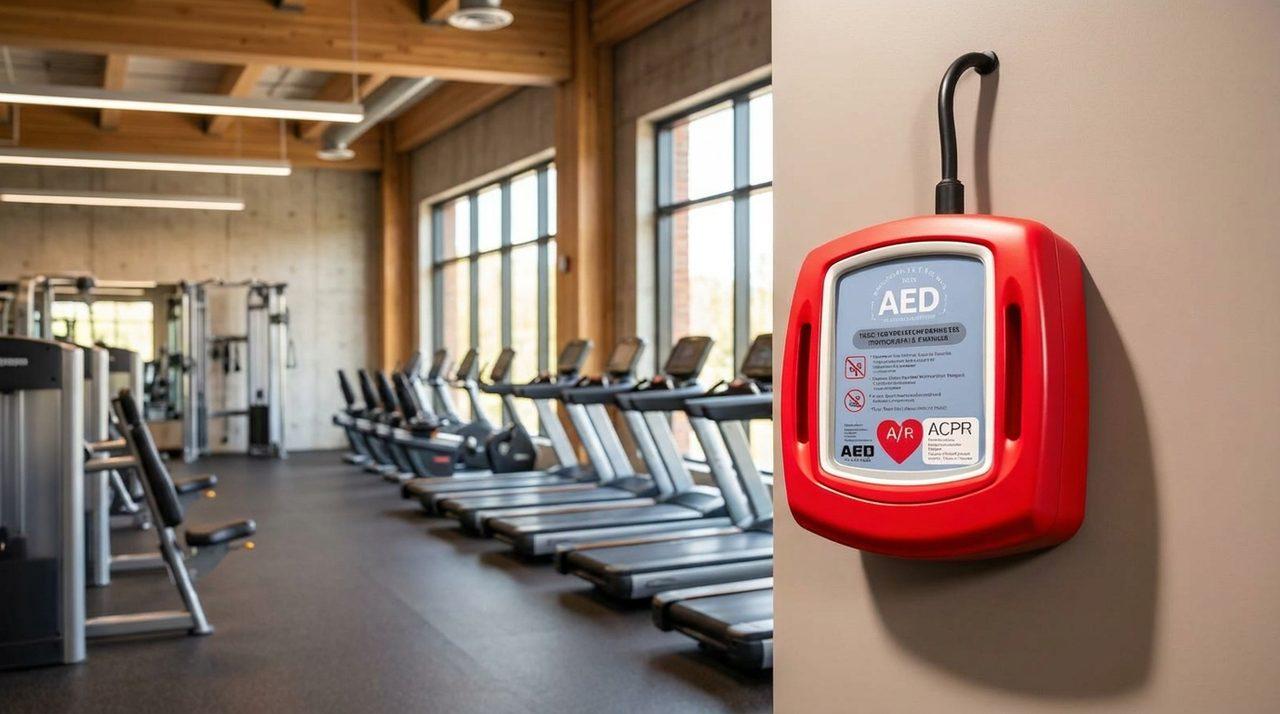
Fitness centers are high-risk environments for sudden cardiac arrest. The combination of intense physical exertion, elevated heart rates, undiagnosed cardiovascular conditions, and the demographic mix of gym members creates a scenario where cardiac emergencies happen more often than most gym owners expect.
In the United States, an estimated 1 in 50,000 to 1 in 80,000 gym members will experience sudden cardiac arrest during exercise each year. For a facility with thousands of members, those odds translate into a real possibility. Colorado's altitude adds another layer of risk, as the reduced oxygen environment means the cardiovascular system works harder during every workout.
For gym owners, managers, and fitness professionals in Colorado, the question is not whether a cardiac event will happen. It is whether your team will be ready when it does.
Schedule on-site CPR and AED training for your fitness center staff.
Colorado AED Requirements for Fitness Facilities
Colorado Revised Statute 13-21-108.1 provides Good Samaritan protection for individuals and entities that use AEDs in emergency situations. While Colorado does not currently mandate that all fitness centers carry AEDs by state law, the legal and ethical landscape strongly favors having them.
Several factors make AED placement a practical necessity for gyms:
Liability protection. Facilities that have AEDs and trained staff are better positioned in liability claims. A gym that experiences a cardiac arrest death without an AED on site faces significant legal exposure, especially when industry standards clearly recommend them.
Insurance requirements. Many commercial liability insurers now require or incentivize AED programs for fitness facilities. Check with your insurance carrier, as having a documented AED program with trained staff can reduce premiums.
Industry standards. The International Health, Racquet & Sportsclub Association (IHRSA), the American College of Sports Medicine (ACSM), and the AHA all recommend that fitness facilities maintain AEDs and ensure staff are trained in their use.
Member expectations. Today's gym members increasingly expect their facility to have visible AEDs and trained staff. It is a differentiator that signals professionalism and member safety.
For more about AED placement and usage, see our guide to AED locations in Denver and how to use them.
Staff CPR Certification: What Colorado Gyms Need
OSHA CPR requirements for Colorado employers establish the baseline: any workplace where employees may be exposed to cardiac emergencies should have trained first responders available. For fitness centers, this means CPR and AED training is not optional for staff.
Who should be certified?
At minimum, every employee who works the floor, including personal trainers, group fitness instructors, front desk staff during operating hours, and facility managers, should hold current CPR/AED certification. The AHA recommends BLS certification for healthcare providers for staff in medical-adjacent roles, while Heartsaver CPR/AED is appropriate for general fitness staff.
Which certification should your team hold?
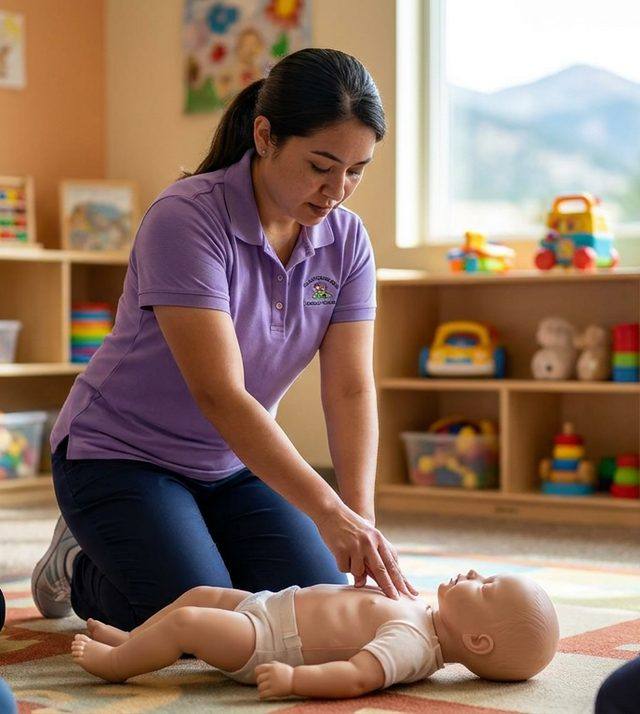
For most gym staff, the AHA Heartsaver CPR/AED course covers everything needed: adult and child CPR, AED use, and choking response. Personal trainers and exercise physiologists who work with high-risk populations may benefit from BLS certification, which provides more advanced airway management and team-based resuscitation skills.
Not sure which class is right? Our breakdown of the different types of CPR classes can help you decide.
How often does certification need to be renewed?
All AHA certifications are valid for 2 years. For Colorado gym staff, this means building a renewal cycle into your HR processes. Learn more about how long CPR certification lasts and how to manage renewals across your team.
The Altitude Factor for Colorado Gyms
Colorado gyms face a unique variable that sea-level facilities do not: altitude. Even in Denver at 5,280 feet, members are exercising with approximately 17% less available oxygen than at sea level. In mountain communities like Vail (8,150 feet), Breckenridge (9,600 feet), or Leadville (10,152 feet), the cardiovascular stress of exercise is substantially higher.
This means:
- Members with undiagnosed heart conditions are at greater risk during intense workouts.
- New residents and tourists who have not acclimatized face elevated cardiac risk.
- Staff performing CPR will fatigue faster due to the same altitude effects. Rotating compressors every 2 minutes, as the 2025 AHA guidelines recommend, becomes even more critical.
Understanding how altitude interacts with exercise and cardiac emergencies is part of being a responsible fitness facility in Colorado.
Building Your Gym's Emergency Action Plan
Having AEDs and trained staff is essential, but without a documented Emergency Action Plan (EAP), your team may not respond effectively under pressure. An effective gym EAP includes:
1. Clear roles and responsibilities. Who calls 911? Who retrieves the AED? Who begins CPR? Who directs EMS to the patient? Assign roles in advance so there is no confusion during an emergency.
2. AED placement and maintenance. AEDs should be accessible within 3 minutes of walking time from any point in the facility. Batteries and electrode pads have expiration dates. Assign a staff member to check AED readiness monthly.
3. Regular drill practice. Run cardiac arrest simulation drills at least twice a year. This builds muscle memory and identifies gaps in your plan before a real emergency exposes them.
4. Communication with EMS. Know your facility's exact address (including suite or unit number), the fastest entrance for EMS, and any access codes or locked doors that could delay response. Post this information at the front desk.
5. Documentation and follow-up. After any emergency response, document what happened, what worked, and what needs improvement. This protects your facility legally and improves future response.
On-Site Training: The Best Option for Fitness Centers
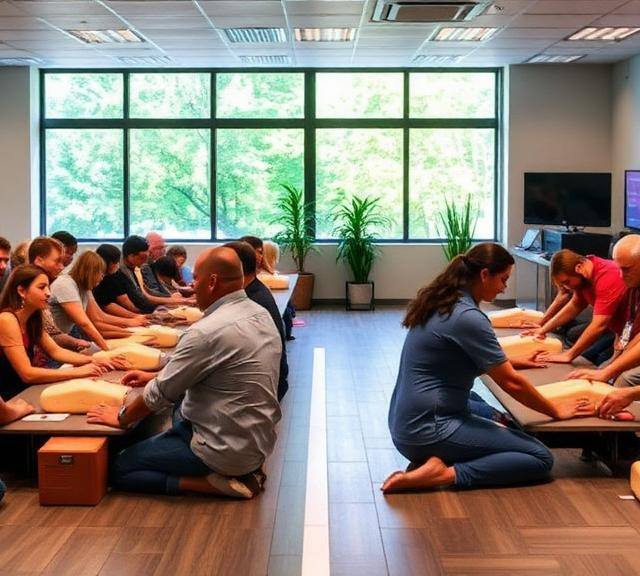
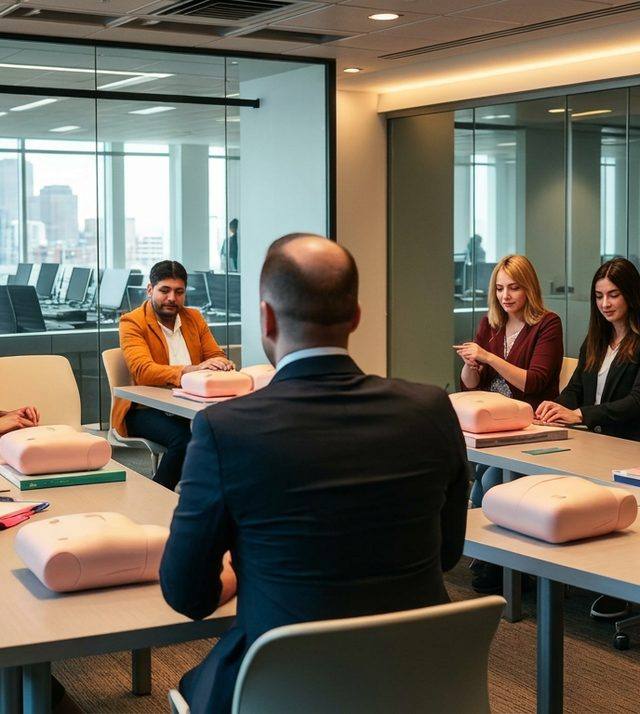
Scheduling individual staff members to attend off-site CPR classes is logistically difficult for gyms that operate long hours with rotating schedules. On-site group training solves this problem by bringing the instructor to your facility.
Benefits of on-site training for gyms include:
- Familiar environment. Staff train in the actual space where they would respond to an emergency. They practice retrieving your specific AED, navigating your facility layout, and coordinating with the team they work alongside every day.
- Schedule flexibility. We can train your team before opening hours, during slower periods, or across multiple sessions to cover all shifts.
- Cost efficiency. Group training rates are typically more economical per person than individual class registrations.
- Team building. Training together builds the coordination and communication that makes real emergency response effective. Learn more about group CPR training vs. individual classes to see which approach fits your facility.
CPR-Professionals offers AHA-certified on-site training throughout Colorado. Whether you operate a single-location boutique studio or a multi-facility chain, we can customize a training program for your team.
Liability and Legal Protection
Colorado's Good Samaritan law provides important protections for individuals and entities that provide emergency care in good faith. Having a documented AED program with trained staff strengthens your legal position. If you are wondering about liability when performing CPR, the answer is that trained responders acting in good faith are well protected under Colorado law.
However, the absence of an AED or trained staff can create liability. If a member suffers cardiac arrest in your facility and your team is unprepared, the legal and reputational consequences can be severe. Investing in CPR and AED readiness is both a moral imperative and a sound business decision.
Protect Your Members and Your Business
Your gym exists to help people get healthier. Making sure your team can respond when a member's heart stops is the most fundamental expression of that mission. CPR and AED readiness is not a box to check. It is a commitment to the people who trust your facility with their health.
CPR-Professionals is an AHA Authorized Training Center based in Boulder, serving fitness facilities across Colorado with on-site CPR, AED, and First Aid training. Our courses meet all AHA standards and include same-day eCard certification.
Check our pricing page for group rates or visit our FAQ for common questions about scheduling and certification.